Arquivo do autor:zonda525

16.000 colors vs. 1

Now that a wrote the title of the text I realize I should`ve thought about making it about using colors or tones of gray (nowadays saying something about Shades of Grey makes you almost an automatic shallow repressed person. The sad thing is that I registered a blog about 3 years before with this title and never used it. Now I probably never will…). But it`s not about that. It`s about photographers and in almost all extent, about people`s behavior.

As I was researching to buy my 50mm lens (I think I never read that much before making a purchase) I dived deep into the corners of the internet, trough it`s forums and other decaying places (like abandoned blogs, even in the other side of the Geocities road). Those forums held extensive discussion about lenses or camera bodies and every other technical specifics existent in our field, and I was amazed to see how diverse were the persons discussing and how polarized were the discussions. So many people from different countries, origins and everyone had a single opinion while everything seemed to be a twofold situation.

As I was discussing on the last post, it`s RAW or JPEG, it`s Canon or Nikon, you`re a pro or you`re a moron. According to what I`ve learned during my research, Sony users are hipsters with no knowledge of photography and LEICA users are rich guys who think they know a lot. The other brands are just there like those blue guys the Power Rangers fight before the real fight begins. That said, if you take photography seriously you must choose between Canon or Nikon…oh, and shoot RAW.

I remember buying my first camera. I didn`t know anything about those technicalities so I bought from the same brand of my previous point-and-shoot: Canon. Moths latter I read about this “war” among users and started to read camera reviews and to see 100% magnified crops from each manufacturer. Yes, there was a small difference. Canon took the road of color rendition on the Rebel Series (so the red was not only red, but a saturated ruby red) and Nikon took the path of sharpness (so the colors were a bit more muted but you could see texture better). It`s not about quality. It`s just about preference. One could`ve taken the others path. The Canon lenses are, in fact, cheaper than it`s Nikon counterparts, however, lot`s of Nikon lenses are superior to Canons in things like rounded aperture blades, that do not affect the image objectively, but do make the background blur more pleasant. It`s plainly stupid to polarize such discussions. I wish I could have a Canon AND a Nikon so I could enjoy all the possibilities. Furthermore, who is paying these people to make so much noise in favor of some brand? I keep asking myself what kind of insecurity do we humans have hardwired in ourselves that urge us to stick to a extreme point of view about things. Stop and think for a moment: is Coke or Pepsi, you are from the Left or Right, it`s American or European cars…

Photography is such a fantastic form of art exactly because it`s not strapped to anything. One can express itself by making almost any form of visual representation. From a trivial brick wall to a photo of a drawing, in a way that expresses not only the drawing, but recreates the moment of the drawing`s making. And yet the focus shifts away from it. We have such fantastic machines that are capable of seen almost 16.000 colors and we, as operators of Canons or Nikons can only see 1.

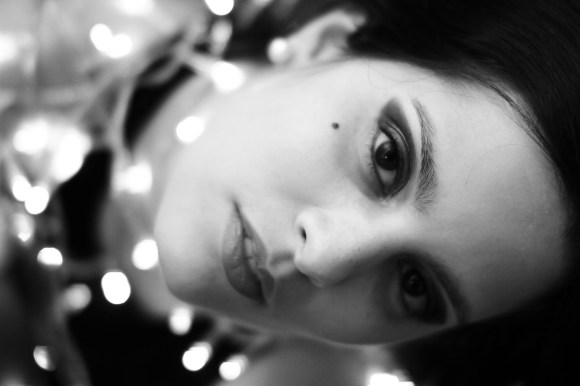
And this is how I got lazy.

Since I started caring about “professional level” photography I`ve been reading the Ken Rockwell website. It`s a very controversial piece of website and his opinions, for my delight, frequently enrage the photographic community. I like his style because he`s not afraid to speak out something he believes, even if it goes against all the common knowledge.

Back in 2008 I read something in his site against post processing and against the use of RAW format. It`s a somewhat deeply-held belief that amateurs use the JPEG format and the so-called “pros” use RAW. Without expanding into the particularities of each, RAW retains A LOT more information than the JPEG (in my camera, the RAW file is six times larger than the JPEG) and makes it possible to adjust the picture off camera with softwares like Adobe Lightroom or Photoshop. From the middle of an opening in the void, comes Ken with a crazy (but somewhat exceptional) assertion: how about you “pros” learn how to shoot so you don`t actually NEED any software adjustments to your pictures?

I remember reading that inside my office while working and laughing loudly while thinking about the next round of flame wars in the internet photography forums. Then it struck me: he is damn right! If one really learns how to use its camera, shoot the subject from the right angle and position, little or no tweak will be necessary. I`m sure the masters of Photoshop will bluntly disagree with me. Too sad I`m discussing photography and not image editing, and yes, I make a very clear distinction among photography and image editing.

With this kind of though I started my path through photography. Six years later I`m what one can call lazy photographer. I want my shots perfect (in the sense of “the way I had them in my mind of better”) straight out of my camera. While I love to shoot, I have to confess: couldn`t care less about channel mixers, layers and so on. The plot twist? I shoot raw, edit and convert it in the camera.

The Eos 60D (and probably all cameras from it`s generation on) have the capability to edit RAW (so you can adjust +1/-1 stop on exposure, light balance, correct lens fallout and distortion) and then convert it to JPEG in camera. To lots of orthodox photographers this is the useless tool ever created by Canon. To me? It`s what I needed from software editing.

While I still think a great photographer with good capabilities on software editing is going to achieve greater results than the one without its computer abilities, I`ve became lazy, and my laziness made me learn a hell lot and improved my capability to take the right picture right on the first click.

My Missing Piece…

My Missing Piece...

On a sea of blue I found my missing piece…

Etiquetado , , ,

Sparkling Eyes

Sparkling Eyes

Etiquetado ,

Why isn`t photography (as we know it) doomed?


In recent months I`ve read some articles of different countries bragging about the merits of “true photography” as opposed to the minute-maid Instagram effects and similar apps. It`s like our collective conscience snapped at the same time and a growing fear reached a turning point: are we condemned to live and watch photography turn into thousands of new but old clean but stained pictures of obvious themes?

No.

A while ago, I watched a video from Creative Mornings. It gave some impressive statistics on the content generated by humanity in a per day basis. Instagram reports it receives about 40 million photos every day, and it’s, by a large margin, dwarfed by Facebook, that takes an impressive 200 million uploads every single day. It sums up to more than 6 billion pictures in a single month and a total of 90 billion images hosted by the website. Erik Kessels, a Dutch artist, printed one single day of Flickr images and took it to an art gallery. The gallery was flooded with pictures.

In past times when we went to an art gallery to see an exposition of photography we had some things we took for granted: they were great for some public, they were selected by someone with some knowledge on the topic and if we were to see it, it would take at least one minute to see each printed photo. Well, today, if you manage to make someone open a thumbnail of a picture, it`s already something to be happy for. At the same time the internet gets flooded of meaningless pictures, the struggle to make something stand out and get any amount of attention is greater than it has ever been.

It boils down to some guidelines I`ve been trying in the last month or so. The first one is that one should try to take pictures that represent the raw nature of what one wants to express. Any form of cliché is probably going to make the picture fall into the void of the 90 billion. It`s purely about what you have to show to the world, what`s unique in your way of seen things. I`m fully aware that my pictures may not fall into this category, but I`m pretty convinced that it`s a good way to go. Besides that, try to display your pictures in some place were merit counts in some form. The 500px.com is not a perfect place (I`ve already uploaded a single picture at the same time somebody was uploading it`s entire vacation album and my picture already started at page, say, 10), but it`s way better than Flickr. Third, and lastly, it`s about what I`m trying to accomplish here: don’t let the picture stand all by itself. Select some of your work, and write a bit about it. I saw this amazing photo in 500px of the Milky Way and the photographer wrote the story of how he got the picture. The result is that I`ve already seen thousands of pictures of the Milky Way, but his picture meant more because I`ve connected to his story. If you don`t like to write, connect it so some other form of craft.

Craft, by the way, is what differentiate the inspired well-made work from the trivial “look at me at the beach with some weird effects that came up when I pressed a button at my new app”. Craft and the growing appreciation for it in many fields of human life (from handmade beer to groceries) are the forces that will inexorably separate the frivolous photography from what we call photography, and even if we share the same space, no effort is going to be needed to set one apart from the other.

While I leave myself

A truthful hug

While my legs follow my steps

Empties my chest, leaves me breathless

I wanna follow, but I can only freeze motionless

A goodbye hug, carrying no love, no pain

In a second, I feel the lines being cut

And I fly freely somewhere

While my kingdom paralyzes

I can’t tell where do I go when I leave myself

Never asked let alone complained

Never knew it was some kind of goodbye

From me to myself

When I abandon what I`ve always called I

Clear`n`now foggy

Noisy`n`now silent

And so I seat and wait

While I know I`m somewhere hovering

Over the places I`ve ever wanted to reach.

Open your eyes.

Open your eyes.

Now look at me and open your eyes.

Etiquetado ,

So there I am…

…at three a.m seating on a rug, talking to my mother-in-law`s boyfriend, Brooks. When you get to stay at the house of someone who you have little to no intimacy, it`s pretty usual for both parts to try to make some kind of small talk. Our conversation that night was anything but small. We were talking about photography, lenses, brands, and why the hell were Leica`s cameras so expensive. At one point, Brooks went inside the house and brought a black case, a big case that seemed to be heavy. He sat again and put the case on the floor opening it. I remembered a movie from 1987 called “Duck Tales: Treasure of The Golden Suns” when uncle Scrooge gets the gold fever after seeing piles of gold in an ancient city in south America. I was completely astounded to see such an impressive collection of Leica lenses. Some of them dated back to the seventies. Even though they looked and felt way better than my 2013 Canon lenses I could never convince myself that old is better, or even that well-constructed metal lens would perform better than cheaper plastic ones. I started discussing the resolution capabilities of the lenses and the fact that I could not understand a camera costing over nine thousand dollars with lower technical capabilities over a four thousand dollars professional camera made from Canon or Nikon. Brooks than interrupted me (which, apparently, is the only way to make a point after I start discussing a subject I really like) and said “sometimes, it`s not the resolution of the lens or the camera you want. It`s more about the character and the way the image is retained”. From the top of my technical standpoint, I thought to myself: nice way of justifying spending money in some fancy gear that can be outmatched by a hundred dollars plastic 50mm lens. Next topic please.

Days gone by and I kept that tough. How can a piece of equipment have character? I mean, from where I come, lenses have resolution, contrast, MTF graphs, distortion, vignetting, and so on. Objective variables that can be measured in a lab. If you want to find out the better 50mm lens, the only thing you have to do is study the data. Slowly, as if it knew it was time, an old wish came to surface: maybe I should have given the Sigma 50mm f/1.4 a chance. The Sigma case was a closed one for me. I wanted to buy a 50mm f/1.4 and my options were Canon`s (which had the bad habit to break the auto-focus motor from time to time), the Zeiss (wich weld some impressive optics but no auto-focus and some weird blur in the background) and the Sigma. The Sigma showed a gigantic front element and held the record of weighting over one pound. It was a nice piece of glass with a modern design and some controversial optics, let alone the fact that users kept reporting an erratic auto-focus system. I decided not to buy any of them, but the images from the Sigma, mainly it`s background blur (or bokeh), kept me wanting it.

A few days later, we were in New York and I came across B&H, probably the biggest photographic equipment store in the U.S. I asked the salesperson to try the lens in my camera and test the auto-focus to check my results. They were terrible. The lens seemed to have it`s own will, and would focus wherever it felt it should. And to make things worse, the camera provided focus confirmation. It was like it was saying right in my face (would it be my eyes?): “here you go, I can confirm you selected the central focus point and that the focus is anywhere but there, so you`re clear to push that button and capture a new random impression of reality!”. I asked for another copy and things got a little better. If we consider the fact that the depth of focus provided by a lens opened at f/1.4 is of about 5mm and that everything in front of it or behind it will be strongly out of focus, it`s not an wanted characteristic to have an autonomous self-aware auto-focus system. The times I could get it right, tough, the images were stunning. The focus point was dead sharp, while the surfaces close to it had a slight dreamy look with the background condensing itself to the image in a soft and almost creamy way. The characteristics that made the images produced so great were not objective. The lens sharpness is not great, the resolution is average, and objectively my decision not to buy based on these variables was utterly right. The crazy glass, nevertheless, produced the best images my camera ever caught.

…and I took a leap of faith. Spent the near four hundred dollars almost knowing I would regret not have listened to my own reason. Got back to the hotel and took the lens out of the case. It was a different copy from the one I`d chosen at the store. I was back into the lottery game. Roll the dices and let`s check the personality of my new lens. I tested it as I never did before. I wanted it to be good, and tried almost every combination of distance, aperture, and focus point. All the tests made me comprehend one thing: this was a different kind of equipment. The mass production of photographic equipment pasteurized the results one can get by using it. When you buy a lens in U.S it produces approximately the same results as a lens produced in Japan. But not my Sigma. This gigantic barrel is a very peculiar, complex and demands knowledge so it can deliver the best images I`ve ever taken or completely useless misfocused crappy images when recklessly handled. I started comparing the images produced by my new lens with my old Canon 50mm f/1.8. The Canon is a cheap plastic made lens with the best optics one can get if only the objective factors are evaluated. The images it produces are dead sharp, with good color saturation, reasonable bokeh but something was missing. Something, somehow, turned my objective scoreboard insufficient.

More than seven hundred miles away, Brooks was right: the lens had a character, and I liked it.

And then, the end.

When I was eighteen, I began enjoying photography with a Palmtop that came with a VGA camera bundled. My days and nights slowly began to be recorded, as I could not stop firing “that thing” at every unusual thing I saw. Sometime later a Sony Cybershot and shortly after a Canon Powershot made my days. I was really enjoying that new hobby and started experiencing things, like long exposures at night and macro photography. None of the cameras gave me the ability to manually adjust exposure or any other technical aspect in a meaningful way. That left me only with creativity as a tool to create my pictures.

As a recent graduate, I was not earning a lot, and took me a long time until I could buy my first DSLR. It was worth it. The shiny new Canon Xsi with twelve megapixels sensor and a full manual control would finally give me the possibility to create some background blur and make “professional” pictures. Without knowing, I was unleashing a monster that I was not aware existed. I was entering the Technical Chasm. My pictures muted and I tried to correct it reading reviews of gear that would solve my problem. That new lens would probably make my pictures better. That new flash is just what I need to get that exposure right. My lenses are bad. The color rendition is not right and they`re too soft wide open. Graphs showing the resolution of each of my lens were thoroughly studied so I could limit myself to the “sweet spot” when taking pictures. ISO charts, contrast analysis, color rendition. New equipment, new study. My knowledge of photography limited itself into “the required knowledge to maximize quality when photographing”.

It was my hiatus as a photographer. It`s probably similar to the hiatus I`m living as a enthusiast writer. That huge wave of “something is missing” that takes your inspiration and torn it apart, leaving you with nothing but an empty page or an empty memory card. The story, however, is definitely not about my writing hiatus and, as one can see, work is being done in ending it, as I bought a new laptop and even changed the language! Back to the photography.

Six years passed. Not some small amount of time. Six entire years of muted pictures and a race buying more gear and getting frustrated after seeing the results. It’s really sad not being able to define your own style as the only thing left is to chase people`s shadows without ever matching them. After buying some good amount of equipment, even the foolest begin to question if the pictures shouldn`t be better. I clearly remember the anxiety every time I posted an image online and waited to collect some “spare change” of appreciation. The taste failure leaves in the mouth is somewhat repulsive to me. Something had to change or I would stop taking pictures. Until now, nothing changed.

The way events happen in life, the chains that connect each and every fact in an invisible web, pulsed in a way to change my story. In an already explored way, I came across a piece of glass that made me look to photography beyond the chasm. I could finally get back into trying expressing trough pictures, no matter the color, contrast, and sharpness whatsoever. Luckily, I was able to retain the knowledge I got passing through the chasm, and that makes photographing easier, as most of the process of configuring the camera is now totally automatic to me.

Proudly I posted an image that marks a milestone for me, focusing on expression rather than technique, and went to bed, just to be waken up by the notification that it went to the popular images on 500px.com. No more begging for “likes”. This is my art and I have to go to bed.

Lucky clicks.